Connecting Future
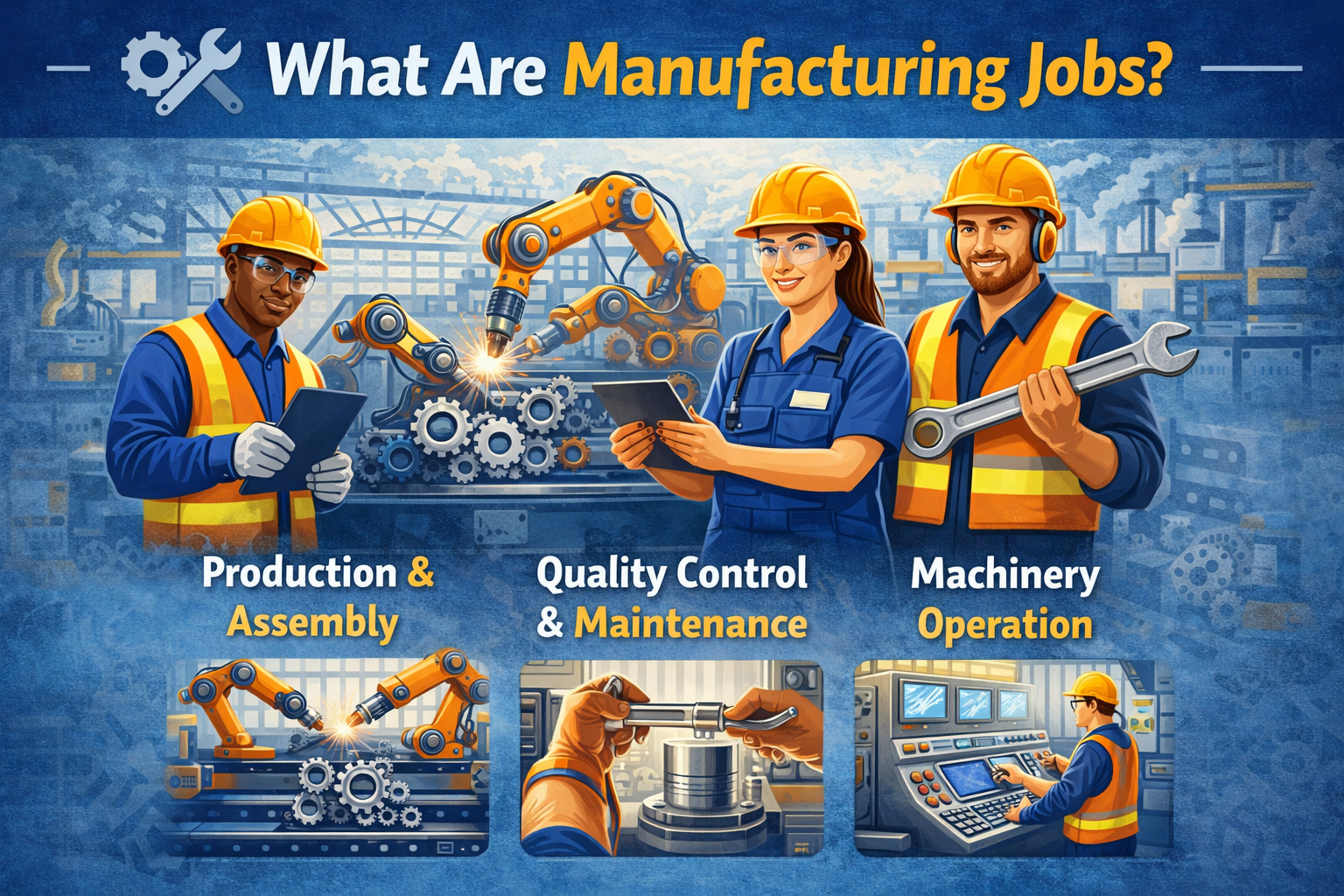
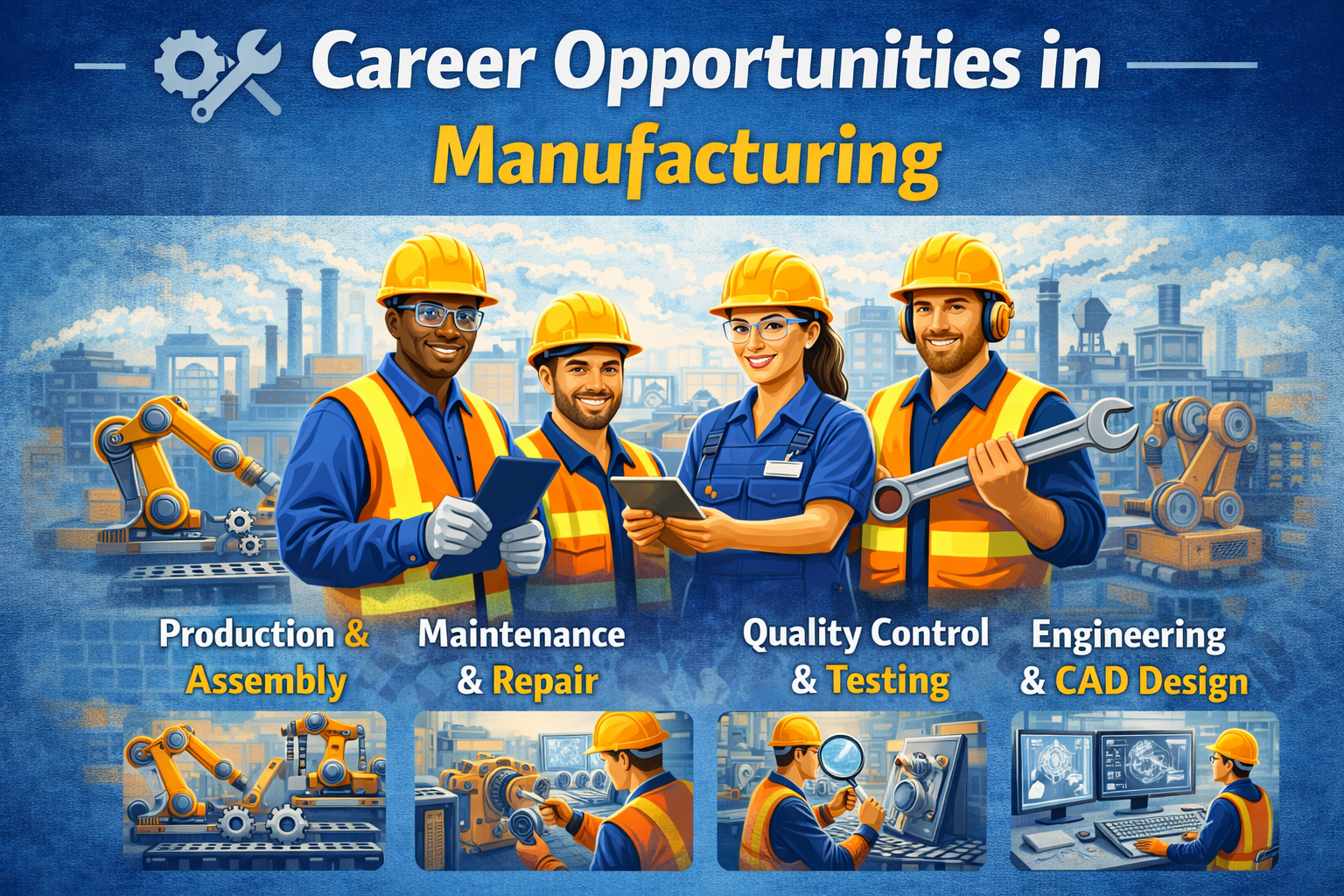
Manufacturing jobs involve producing goods using machinery, tools, and labor across industries like automotive, electronics, and food processing. Manufacturing jobs refer to employment roles involved in the production of goods from raw materials using machinery, tools, and human labor. These jobs are a fundamental part of the industrial sector and play a crucial role in driving economic growth, supporting global supply chains, and meeting consumer demand for products across various industries.
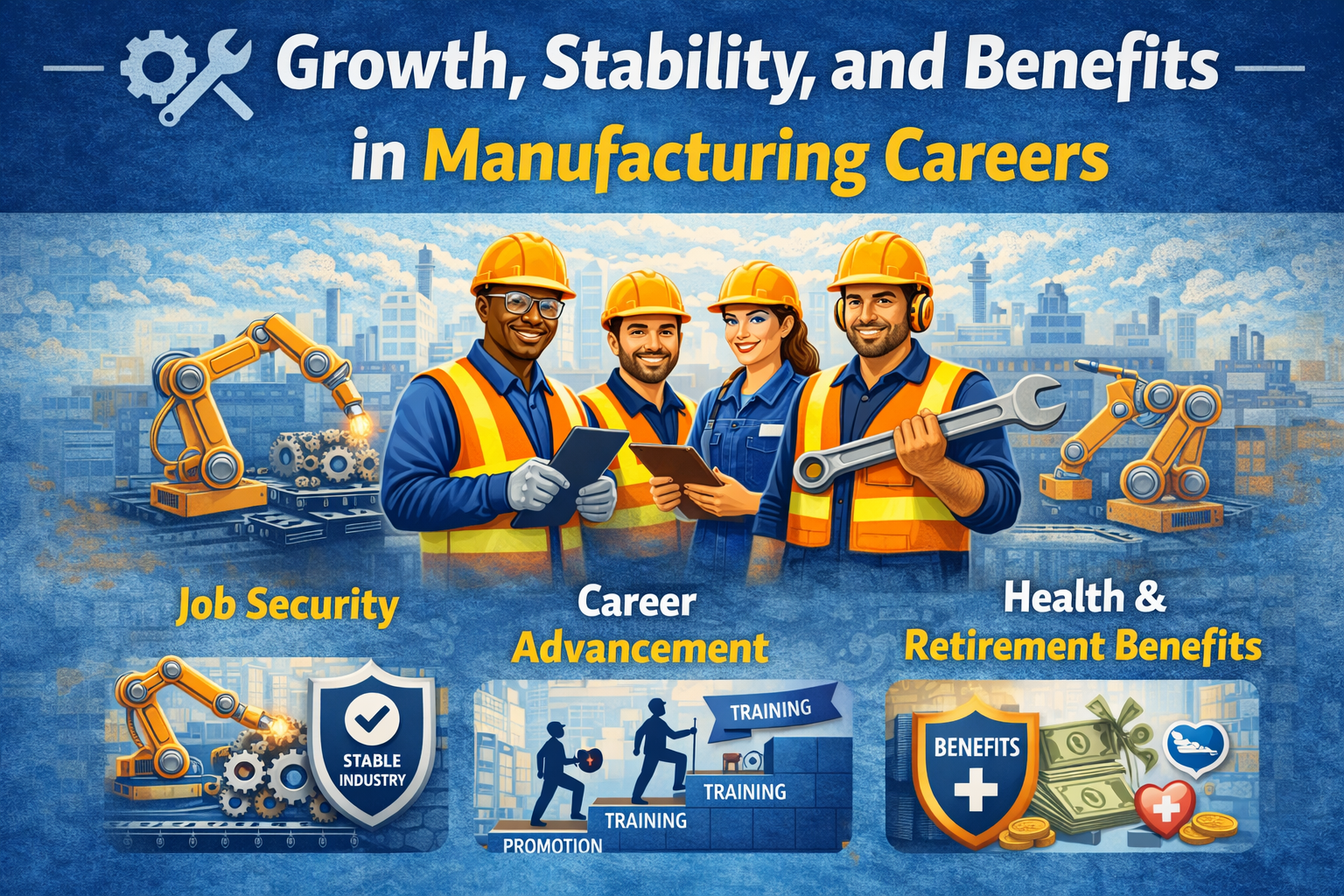
Yes, manufacturing jobs offer stability, competitive salaries, and career growth opportunities, especially with the rise of automation and advanced technologies. Manufacturing jobs are widely considered a strong and reliable career choice, especially for individuals seeking stability, skill development, and long-term growth. As one of the core pillars of any economy, the manufacturing sector plays a vital role in producing goods, supporting industries, and creating employment opportunities across the world. With continuous advancements in technology and increasing global demand for products, manufacturing remains a promising career path for both freshers and experienced professionals.
Key skills include technical knowledge, attention to detail, problem-solving abilities, and understanding of safety standards. Advanced roles may require engineering or management expertise. Manufacturing jobs require a combination of technical expertise, practical abilities, and soft skills to ensure efficiency, safety, and productivity in industrial environments. As the manufacturing sector continues to evolve with automation and advanced technologies, the demand for skilled professionals is increasing. Whether you are working on the production floor or in a technical or managerial role, having the right skill set is essential for success and career growth.